
A Dedicated Space for Your Professional Growth
Is it time to prioritise your professional journey?

Grounded in Experience, Driven by Passion
As social workers, we are the front-line witnesses to the human experience. We hold the space for complex trauma, systemic injustice, and the delicate process of healing. But in the midst of high caseloads and organisational demands, your own professional well-being and clinical growth deserve a dedicated sanctuary.
I believe that supervision is the heartbeat of ethical practice. It is where we move from "doing" to "reflecting," ensuring that the heart-centered work you do is sustained by clinical excellence and personal resilience.
My Supervision Philosophy: Nurturing the Practitioner
My path to becoming a supervisor is built on a foundation of rigorous training and diverse clinical practice. As an Accredited Mental Health Social Worker (AMHSW) with a Master of Counselling Social Work from UNSW, I have spent years navigating the intersections of trauma, mental health, and family dynamics.
My background in EMDR, Schema Therapy, and the Gottman Method allows me to offer a unique lens to my supervisees. I am deeply passionate about mentoring fellow social workers, from those just starting their journey to experienced practitioners seeking specialised AMHSW accreditation. I don’t just offer supervision; I offer a partnership in your professional evolution.
I reject the idea that supervision should be a cold, evaluative process. Instead, I view it through a strengths-based and person-centered lens. Effective supervision should be:
Encouraging & Nurturing: A space where you can safely explore your anxieties, worries, areas of growth or even imposter syndrome without judgment.
Constructive & Developmental: Focusing on your long-term trajectory, helping you integrate new modalities and sharpen your clinical identity.
Compassionate & Supportive: Acknowledging the heavy emotional labour of our field and providing the restorative care needed to prevent burnout.
In our work together, we utilise reflective practice to dive deep into the parallel processes at play. We don’t just look at what the client is experiencing; we look at how the work is impacting you, ensuring your practice remains sustainable and ethically sound.
Ready for a more supportive supervision experience?
What We Focus on in Our Sessions
Each session is a collaborative dialogue tailored to your current caseload and professional goals. Whether we meet in person or via secure video link, you can expect:
-
Navigating complex presentations with a trauma-informed and systemic focus.
-
Unpacking the grey areas of practice using our Code of Ethics, as well as best practice principles.
-
Tailored guidance for those working toward their AMHSW status or seeking to meet CPD requirements.
-
Proactive strategies to maintain your boundaries and protect your longevity in the field.
-
Practical support for implementing evidence-based frameworks in your daily practice.
Let’s Strengthen Your Practice Together
You shouldn't have to carry the weight of your practice alone. I am here to provide the steady, expert mentorship that helps you transform from a practitioner who feels they are just coping, getting by and barely treading water - to a clinician who thrives and feels confident in their practice.
I’m honoured to walk this path with you. If you are looking for a supervisor who understands the grit and the grace of social work, I’d love to connect. Let's see if our styles align and build a plan for your continued growth
The Clinician’s Toolkit: Free Supervision Resources
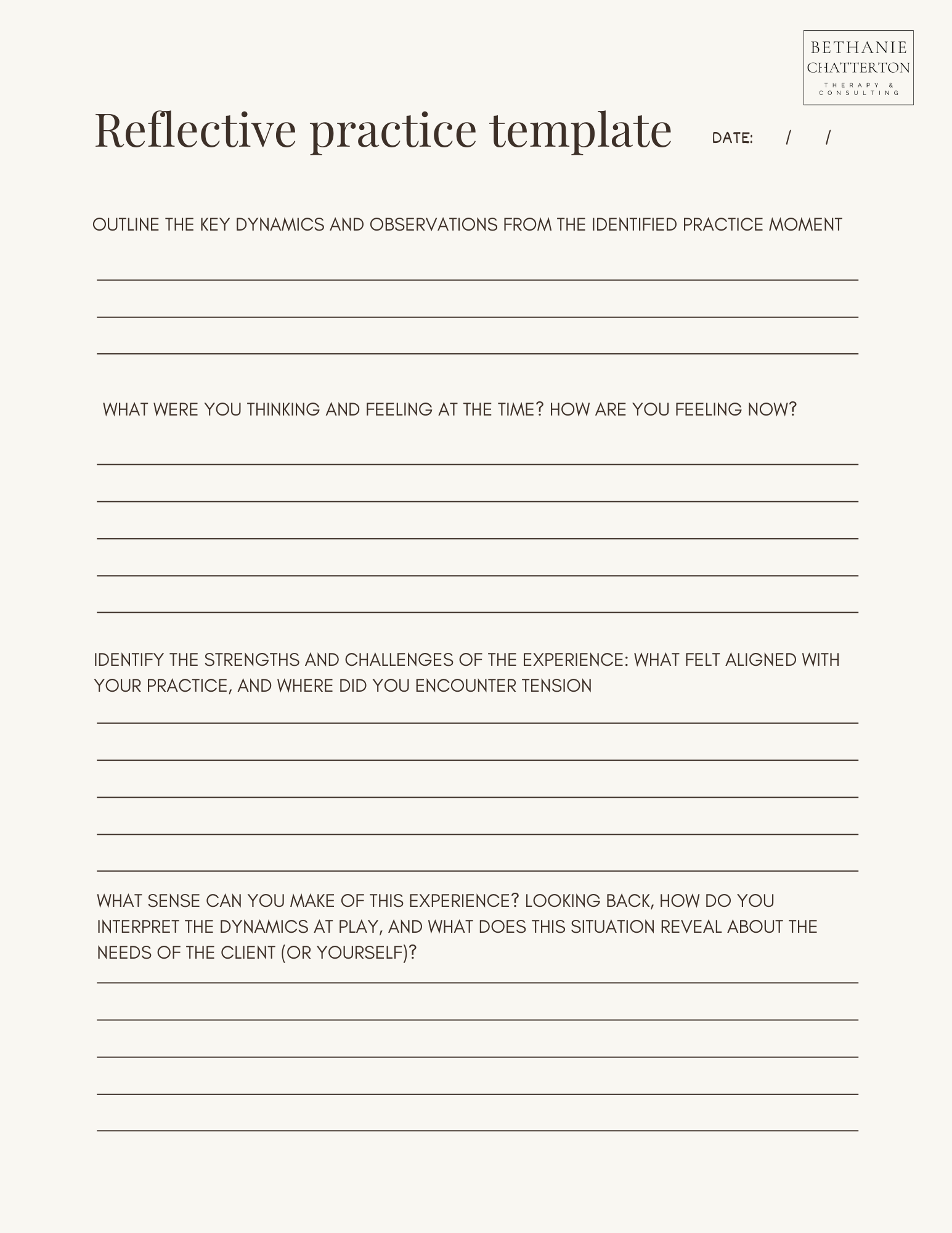
Deepen your clinical insights between our sessions. This template uses the Gibbs Reflective Cycle to help you move beyond the "what happened" of a case and into the "what did I learn" space.
Best for: Preparing for supervision or processing a difficult session.
The AASW standards on what you, as a supervisee, can expect from a quality supervision relationship
The Practice Standards for Mental Health Social Workers 2014 provides detail on standards that need elaboration in the mental health context.

AASW Practice Standards Supplement Expectations as to how Practice Standard 8 works in practice. This document supplements Practice Standard 8 (Professional Supervision) of the AASW Practice Standards 2023.
The Clinician's Digital Library
Recommended Reading & Clinical Frameworks
-
By: Siobhan Maclean
Release Date: 21 November 2023
-
By: Alfred Kadushin, Daniel Harkness
First published in 1976, Supervision in Social Work has become an essential text for social work educators and students, detailing the state of the field and the place, function, and challenges of supervision in social work practice.
This fifth edition takes into account the sizable number of articles and books published on supervision since 2002. Changes in public health and social welfare policy have intensified concern about the social work supervision of licensed practitioners. Tax and spending limitations at all levels of government, combined with the unfolding effects of welfare reform and managed health care, have increasingly emphasized the need for the efficient and accountable administration of health and social services in the private and public sectors. This edition confronts issues raised by these developments, including budgetary allocation and staff management, the problems of worker burnout and safety, the changing demographics and growing diversity of the supervising workforce, evidence-based and licensure supervision, and performance appraisal.
-
What causes people to continually relive what they most want to forget, and what treatments could help restore them to a life with purpose and joy? Here, Dr Bessel van der Kolk offers a new paradigm for effectively treating traumatic stress.
Neither talking nor drug therapies have proven entirely satisfactory. With stories of his own work and those of specialists around the globe, The Body Keeps the Score sheds new light on the routes away from trauma - which lie in the regulation and syncing of body and mind, using sport, drama, yoga, mindfulness, meditation and other routes to equilibrium.
-
By: Pete Walker
Published: 2021
Key concepts of the book include managing emotional flashbacks, understanding the four different types of trauma survivors, differentiating the outer critic from the inner critic, healing the abandonment depression that come from emotional abandonment and self-abandonment, self-reparenting and reparenting by committee, and deconstructing the hierarchy of self-injuring responses that childhood trauma forces survivors to adopt. The book also functions as a map to help you understand the somewhat linear progression of recovery, to help you identify what you have already accomplished, and to help you figure out what is best to work on and prioritize now. This in turn also serves to help you identify the signs of your recovery and to develop reasonable expectations about the rate of your recovery.
-
By: Louis Cozolino
Published: 2021
Veteran therapist and mental health writer Louis Cozolino's classic text contains all of the things he wished someone had told him during the first weeks and months of his clinical training.
Now available in paperback, the book includes guidance about working with your clients, such as how to cope with silence, handle their direct questions, and get them to talk less and say more. It also focuses on the inner experience of becoming a therapist and ways of thinking and feeling while sitting across from clients.
It speaks honestly about not having all the answers, and shuttling up and down between your head and your heart, and mind and body, struggling clients sit before you. It balances the process of developing therapeutic skills while also taking an inner journey-to becoming the professional, and person, you hope to be. With a new introduction to the paperback edition, this book remains an essential clinical reference. -
By: Jeremy D. Safran and Jessica Kraus
Published: 2014
Alliance ruptures, impasses, and transference– countertransference enactments are inevitable in therapy. A growing body of evidence suggests that repairing ruptures in the alliance is related to positive outcome (Safran, Muran, & Eubanks-Carter, 2011). Our research program has led to the development of training methods to enhance therapists’ abilities to detect and work constructively with alliance ruptures and negative therapeutic process (Safran et al., 2014). This article outlines relevant theoretical underpinnings, intervention principles, and empirical findings.